Addressing maintenance, theft, and performance in lighting infrastructure
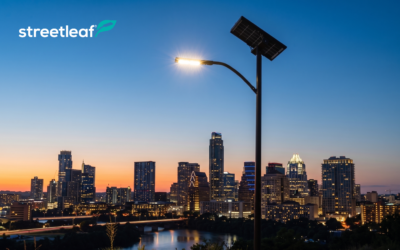
Utilities face a variety of challenges in maintaining public infrastructure. From grid constraints, outage management, theft, and maintenance backlogs, there are a multitude of factors that impact utilities ability to maintain various forms of infrastructure. When it comes to lighting infrastructure in particular, new technologies are offering timely solutions to these hurdles. Streetleaf works closely with utilities and localities along the southeast to replace antiquated, grid-tied streetlights with modern solar-powered lights that meet the needs of today’s communities.
Solar powered lights encounter a variety of misconceptions, from cost and installation, ongoing maintenance, and reliability of the solar panels. Streetleaf’s lights address these concerns head on. Solar streetlights are eight times faster to install, there are $0 in development costs, and run on 100% clean energy. An investment in solar lights is an investment in resilience, helping to reduce long-term costs, improve service reliability, and protect utility revenue.
When you look at how solar can overcome the economic hurdles of traditional streetlights, the case for making the switch becomes clear.
Solar Lights Address Public Safety and Growing Repair Backlogs
Cities across the country are beginning to experience outages of public streetlights as traditional older models of lights begin to need repairs or total replacement. Consider Los Angeles, CA, where there are maintenance backlogs of streetlights that are upwards of 30,000 lights. Adequate lighting can play an important role in community safety after dark. Research has found that well-designed intersection lighting can reduce nighttime crashes by approximately 33–38%, while nighttime pedestrian injury crashes may be reduced by as much as 42% with adequate intersection lighting. Safety concerns can become even more pronounced during extended power outages, with one study finding a 2.6% increase in crime following outages lasting 10 hours or more. Together, these findings underscore the importance of reliable outdoor lighting that keeps streets, intersections, and pedestrian areas illuminated when communities need it most.*
Addressing these backlogs is a priority for communities, and solutions with shorter project timelines are critical. The cost-benefit analysis of switching to solar is clear, as the long term savings for utilities and a reduction in outages keep residents’ peace of mind.
Solar Lights Prevent Theft from Public Infrastructure
Copper wire theft is on the rise. The highly valuable scrap metal is an easy target in traditional streetlights, where the access box is at the base of the streetlight and can be quickly opened to remove wires with a simple set of bolt cutters. Copper wire thefts have plagued cities nationwide. Through partnerships with companies such as Streetleaf, utilities can replace lights with those that don’t require copper and are less prone to theft. When lights are less prone to criminal activity, they remain illuminated and keep neighborhoods safe.
Solar Lights are Part of a Growing Trend to Distributed vs. Centralized Systems
Decentralized, solar-powered, and increasingly IoT-enabled, infrastructure fits into a larger shift toward redundancy and self-sustaining systems in cities. With real-time performance data now available from solar streetlights, utilities can shift towards infrastructure‑as‑a‑service for such systems like solar powered lights. This can open new revenue streams as well, such as maintenance and monitoring contracts.
Furthermore, centralized systems require upstream power and control from a single source, whereas distributed systems can generate power at the edge of the grid. This becomes crucial for extreme weather resilience such as hurricanes. Streetleaf’s solar lights have been tested to withstand winds of up to 160 MPH. When Hurricanes Helene and Milton threatened Florida in 2024, Streetleaf solar streetlights achieved a 99.61% reliability rate, continuing to provide light when many grid-powered systems were impacted.
Utilities face hidden economic pressure to keep communities illuminated, including the threat of growing customer dissatisfaction from unplanned outages and emergency repairs. Shifting from reactive mode to proactive strategies such as solar streetlights, can address lighting infrastructure challenges head on. Maintenance burdens, theft-driven losses, and performance degradation can all be prevented.
*Sources: Streetleaf Hurricane Performance Report (2025); Federal Highway Administration (FHWA), Every Day Counts 7: Nighttime Visibility for Safety; National Hurricane Center; PowerOutage.us.